
Electrical
Power over Ethernet Lighting: The Complete Installation Guide for Modern Electricians
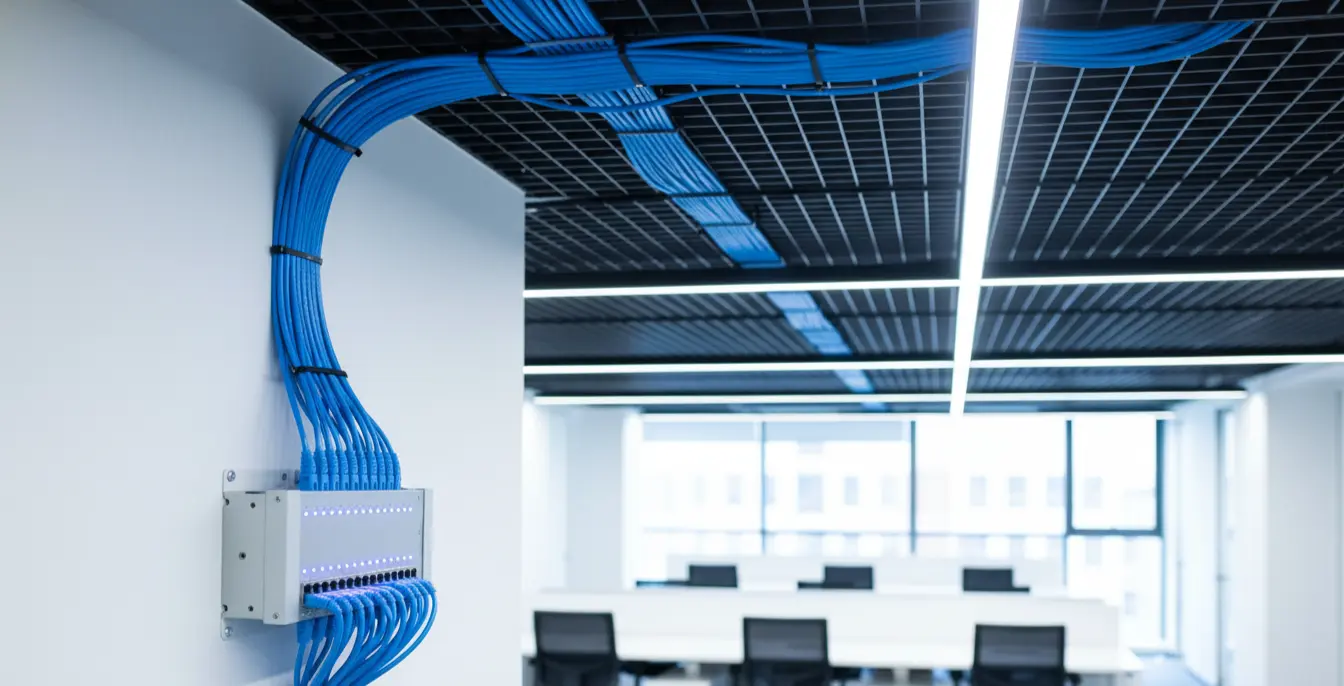
The Burning Question Every Electrician Needs to Answer
Smart building technology is reshaping commercial electrical work, and PoE lighting installations are at the center of this transformation. According to Dodge Construction Network, data center and smart building projects are dominating commercial construction planning. But here's the problem: many electricians are turning down lucrative PoE lighting projects because they lack the technical expertise or confidence to bid them accurately. That's leaving serious money on the table.
If you're still running conduit and pulling wire the same way your mentor taught you 10 years ago, you're about to get left behind. Power over Ethernet (PoE) lighting isn't coming—it's already here. The electricians who master PoE lighting installation today will own the smart building market tomorrow.
What You're About to Learn
This guide breaks down everything you need to know about PoE lighting systems: from understanding IEEE power standards to terminating Cat6 cables with precision. You'll learn how to bid these jobs accurately, install them flawlessly, and position yourself as the go-to contractor for intelligent building systems in your market. Whether you're in Denver dealing with high-altitude commercial builds or working on smart home retrofits in Florida, this technology is reshaping electrical work everywhere.
The Problem: Why Traditional Electricians Struggle with PoE Lighting
Lost Revenue from Declined Smart Building Projects
The construction industry is shifting fast. Commercial projects increasingly include smart building components, with lighting systems leading the integration. When a general contractor asks if you can handle a PoE lighting install and you say no, you're not just losing that job—you're losing the relationship. The GC will find someone who can, and they'll become the new preferred electrical contractor.
In booming markets like Texas and Arizona, electricians who can't quote PoE systems are watching competitors take $50,000 to $150,000 jobs they could have won. The profit margins on these installations run 25-35% higher than traditional electrical work because fewer contractors can do them.
Time-Consuming Manual Estimates That Kill Profitability
Here's where it gets worse. Even electricians willing to learn PoE lighting struggle with the estimating process. A typical PoE system estimate requires calculating power budgets across multiple switches, verifying voltage drop on 100+ cable runs, sourcing specialized components from network suppliers instead of your usual electrical distributor, and coordinating with IT contractors and building automation specialists.
For a 3-person electrical company, spending days on a single estimate can mean delaying other profitable work or working weekends to catch up. And if you don't win the bid, those hours are pure loss.
Technical Complexity Creates Installation Risks
PoE lighting isn't just "different"—it demands an entirely new skillset. You're no longer just an electrician; you're now working with structured cabling, network switches, IP addressing, and data transmission. Miss a detail on a traditional circuit and maybe a light doesn't turn on. Miss a detail on a PoE system and you could fry $15,000 worth of LED fixtures or create a network vulnerability that brings down the entire building's automation system.
The stakes are higher, the margin for error is smaller, and traditional electrical testing tools won't catch PoE-specific problems. You need cable certifiers, power load testers, and network diagnostic equipment that most electricians don't own. This creates a catch-22: you can't get good at PoE work without investing in the tools, but you can't justify the tools without landing PoE jobs.
Understanding Power over Ethernet Lighting Systems
Before you can install or estimate PoE lighting, you need to speak the language. This isn't about memorizing jargon—it's about understanding the technical foundation that makes these systems work.
IEEE Standards: The Power Budget Rulebook
Every PoE system operates under standards set by the Institute of Electrical and Electronics Engineers (IEEE). These standards dictate how much power can safely travel from the network switch to each light fixture. Get this wrong, and fixtures won't function correctly—or worse, they'll fail prematurely.
IEEE 802.3af (PoE): Delivers up to 15.4W at the switch, but only 12.95W reaches the device after cable loss. This was designed for VoIP phones and basic security cameras. For lighting, it's only suitable for very low-power LED fixtures in accent or emergency applications.
IEEE 802.3at (PoE+): Delivers up to 30W at the switch, with 25.5W available at the device. This is the sweet spot for most commercial PoE lighting installations. A quality LED panel drawing 20-25W can run comfortably on PoE+.
IEEE 802.3bt (PoE++ or UPoE): Delivers up to 60W (Type 3) or 100W (Type 4) at the switch. High-output fixtures, specialty lighting, or fixtures that integrate additional sensors and devices need this level of power. In Colorado mountain resorts and high-end residential projects in the Northeast, Type 3 and Type 4 systems are becoming standard for architectural lighting that needs serious output.
The critical concept here: every fixture has a power requirement (Powered Device or PD), and every switch port has a power supply capability (Power Sourcing Equipment or PSE). Your job is to match them correctly. A Type 4 fixture pulling 55W will not work on a basic 802.3af port delivering only 12.95W.
Network Switches: Your New Electrical Panel
In traditional electrical work, your panel is the hub of power distribution. In PoE lighting, that role belongs to the network switch. This is where electricians often struggle mentally—you're not just pulling power to endpoints, you're building a data network that happens to also deliver power.
Two factors matter most when selecting a switch:
Management Capability: Never install an unmanaged switch. A managed switch gives you (or the building's IT team) the ability to monitor power draw on each port, cycle power to specific fixtures remotely for troubleshooting, segment the network for security, and configure VLANs if needed. For professional installations—especially in commercial buildings with Building Automation Systems—managed switches are non-negotiable.
Total Power Budget: This catches even experienced electricians off guard. A 24-port switch might be rated for PoE+ at 30W per port, but it might only have a 370W total power budget. You cannot run 24 fixtures at 25W each (that's 600W total). The switch will shut down ports or fail entirely. Calculate your total fixture load, add a 20% safety buffer, and ensure your switch can handle it. On large installations, you'll need multiple switches distributed throughout the building.
Cable Infrastructure: Where Quality Meets Performance
This is where your traditional electrical craftsmanship meets data networking precision. The cable is everything in a PoE system.
Minimum Standard: Cat6 with 23 AWG Solid Copper Conductors
For any professional installation, Category 6 (Cat6) cable with 23 AWG solid copper conductors is the baseline. Avoid copper-clad aluminum (CCA) cables entirely. They have higher resistance, create excessive heat under PoE loads, and often violate National Electrical Code (NEC) requirements for PoE applications.
Two technical considerations dominate cable selection:
Heat Rise in Bundle Installations: This is straight physics. When multiple cables carrying power run together in a conduit or above a ceiling, they generate heat. The National Fire Protection Association (NFPA) and IEEE standards require derating cable ampacity based on bundle size. For example, a bundle of 37 or more Cat6 cables carrying PoE++ might need derating to 60% of normal capacity. In practical terms, this means spreading cables across multiple pathways or using cables rated for higher temperatures (plenum-rated cables help here).
Voltage Drop Calculations: Every cable has resistance, and resistance means voltage drop. In PoE systems, excessive voltage drop means your fixture at the end of a 100-meter run might not receive enough voltage to operate properly. The IEEE specs allow for up to 100 meters (328 feet) of cable, but that assumes perfect conditions. In real-world installations—especially in larger commercial buildings in markets like Florida or Texas where long cable runs are common—you need to calculate actual voltage drop and potentially limit runs to 80-90 meters for high-power fixtures.
Pro Tip: Use a voltage drop calculator specific to PoE applications. Regular electrical voltage drop formulas don't account for the DC power characteristics and data signal requirements of PoE systems.
Professional Installation: Precision Over Speed
Installing PoE lighting demands a different approach than traditional electrical work. Speed matters, but precision matters more. One bad termination can cause system-wide problems.
Termination Excellence: The Make-or-Break Skill
A poorly terminated RJ45 connector is the number one cause of PoE system failures. Unlike a data-only connection that might just run slow, a bad PoE connection causes intermittent power, generates heat that can melt connectors, and can even create arcing that damages expensive fixtures.
Every single termination must follow these standards:
Maintain Twist Pairs: The twisted pairs in Cat6 cable aren't just for looks—they minimize electromagnetic interference (EMI) and crosstalk. When terminating an RJ45 connector, maintain the twists as close to the connector as physically possible. Any untwisting beyond 0.5 inches degrades performance.
Follow T568A or T568B Wiring Standards Consistently: Pick one standard (most commercial installations use T568B) and use it on every single termination. Mixing standards creates problems.
Proper Connector Seating: The cable jacket should extend into the connector body, and the conductors should fully seat against the contact blades before crimping. Half-seated connections cause high resistance and heat generation.
Strain Relief Matters: The crimp must secure the cable jacket, not just the conductors. This prevents the conductors from pulling free during installation or from building movement over time.
Testing: Your Professional Insurance Policy
After installation, testing is not optional—it's your professional liability protection. A simple continuity tester is worthless here. You need a cable certifier.
Professional tools from brands like Fluke Networks or Ideal Networks can certify the entire cable link for Cat6 performance standards and perform live PoE load tests, simulating the actual power draw of fixtures to verify the entire run can handle the required wattage without excessive voltage drop. These tests catch problems before the lights go in, before the ceiling is closed, and before the customer finds out there's an issue.
Yes, a quality certifier costs $2,000-$4,000. But one failed installation caused by a bad cable can cost you that much in labor and materials to fix—not to mention the reputation hit when a GC finds out their smart building isn't so smart because you didn't test your work.
Design and Commissioning: Thinking Like a Systems Integrator
Installing PoE lighting means you're no longer just an electrician—you're part of a larger systems integration team. The job doesn't end when the fixtures are connected.
Every Fixture Is a Network Node
Each PoE fixture has its own IP address on the building's network. Many fixtures integrate occupancy sensors, daylight harvesting sensors, or temperature sensors—all sending data back over the same Ethernet cable that supplies power. This is where collaboration becomes critical.
Before you start pulling cable, these questions must be answered:
- What IP addressing scheme will the building use?
- Which VLANs will the lighting system operate on?
- Who is responsible for programming the lighting controls—you, the GC, or a separate automation contractor?
- What network security requirements must be met?
In commercial projects—especially in markets with strong IT requirements like financial centers in the Northeast or tech campuses in Texas—the building's IT department will have specific requirements for network segmentation and security. Your job as the electrical contractor is to provide a flawless physical layer so the systems integrator can successfully commission the control software.
Commissioning: A Phased Approach
Bringing a PoE lighting system online happens in stages:
Physical Layer Verification: Before connecting any fixtures, certify every cable run. Test for continuity, proper wiring standard, and Cat6 performance certification. Document everything—you want proof that the infrastructure is solid.
Power-Up and Port Assignment: Connect fixtures one at a time or in small groups. Verify that each fixture powers up correctly and draws the expected wattage. This is where your managed switch becomes invaluable—you can monitor each port's power consumption in real-time.
Network Configuration: Assign IP addresses, configure VLANs if needed, and verify network connectivity. This step usually involves the IT team or systems integrator.
Control System Integration: Finally, integrate the lighting control software. Test individual fixture control, zone control, occupancy sensor response, and any automated scheduling or daylight harvesting functions.
This phased approach isolates problems quickly. If a fixture doesn't respond during control system integration, you already know the physical layer and network configuration are good—the issue must be in the control software.
Common Problems and Advanced Troubleshooting
When things go wrong in a PoE lighting system, the issue almost always traces back to the physical infrastructure. Here's how to diagnose and fix the most common problems.
Problem: Fixtures Randomly Dropping Offline
Likely Causes:
Cable Termination Issues: Bad crimps or improperly seated connectors create high-resistance connections. As current flows, resistance generates heat, which increases resistance further—a vicious cycle that eventually causes the connection to fail. Inspect terminations at both ends of the cable run.
Switch Power Budget Exceeded: If multiple fixtures drop offline simultaneously, check the switch's total power budget. You may have added fixtures beyond the switch's capacity, or other devices on the network are drawing unexpected power.
Cable Length Exceeding Practical Limits: Even if your cable run is under the 100-meter IEEE limit, voltage drop can cause intermittent operation, especially with high-power fixtures. Measure the actual cable run and calculate voltage drop.
Problem: Flickering or Inconsistent Light Output
Likely Causes:
Voltage Drop on Long Runs: Insufficient voltage at the fixture causes LED drivers to operate erratically. This is common on corner offices or perimeter fixtures in large floor plates. Solution: shorten the cable run by adding an intermediate switch, or upgrade to lower-gauge cable (Cat6A instead of Cat6).
Defective LED Driver in Fixture: PoE fixtures have an onboard LED driver that converts the incoming DC voltage to the level the LEDs need. If this component fails, the fixture misbehaves. Swap the suspect fixture with a known-good unit to isolate the problem.
Insufficient PoE Standard for Fixture Requirements: Double-check that the switch port providing power matches the fixture's requirements. A Type 2 fixture (PoE+) will not operate correctly on a Type 1 (PoE) port, even if it powers up initially.
How AI Changes the Game for PoE Lighting Estimates
Here's the reality: estimating a PoE lighting job manually is brutally time-consuming because you're juggling multiple systems—electrical work, data networking, control systems, and coordination with other trades. You need to calculate power budgets, count cable runs, source specialized components from multiple vendors, and figure out labor hours for a job you might not have done before.
This is exactly where Trade Agent's AI assistant, Arti, transforms the process. Instead of spending days building a spreadsheet, you can snap photos of the architectural plans, upload the electrical and network specifications, and let Arti analyze the entire project. Arti identifies fixture counts, calculates switch requirements and power budgets, estimates cable lengths accounting for actual routing paths, sources current pricing for PoE-specific components (switches, fixtures, cable, and connectors), and generates a complete estimate in under 10 minutes.
The real power? Arti learns from your actual job costs. As you complete PoE installations, the system refines its labor estimates based on your crew's real-world performance. This means your third PoE lighting estimate is significantly more accurate than your first—and you're not guessing on labor hours anymore.
For a 3-person electrical company trying to break into smart building work, this is the difference between confidently bidding five PoE jobs per month versus declining work because you can't afford the estimating time. It's the difference between guessing on a $75,000 bid and knowing your numbers are accurate.
Similar to how AI reads electrical plans and PDFs to save hours on takeoffs, AI-powered PoE estimating eliminates the manual calculations that slow you down and create errors.
The Path Forward: Your Competitive Advantage
PoE lighting represents a massive opportunity for electricians willing to invest in the knowledge and tools to do it right. The technical complexity creates a barrier to entry—but that barrier protects your margins once you're on the other side of it.
Smart buildings aren't a trend. According to MarketsandMarkets research, the global smart building market is projected to grow from $72.6 billion in 2021 to $121.6 billion by 2026, with lighting systems representing a major share of installations. Every new commercial building and most major renovations will include PoE lighting within the next 5 years.
The electricians and contractors who master PoE lighting installation today will own the smart building market tomorrow. The fundamental skills of running cable and making solid connections remain—but the standards have been elevated. Safety now includes network security. Quality now includes data transmission certification. And estimating now includes power budgeting and network architecture.
By investing in your education, buying the right testing tools, and using technology to make estimating faster and more accurate, you're not just staying relevant—you're positioning yourself at the absolute forefront of the electrical trade.
Just as electricians are capitalizing on renewable energy demand by learning EV charger installation and solar systems, mastering PoE lighting opens up an entire category of high-margin commercial work.
The work is out there. The money is out there. The question is: are you ready to claim it?
Frequently Asked Questions
Can I use regular electrical cable for PoE lighting installations?
No. PoE lighting requires Category 6 (Cat6) or Category 6A (Cat6A) structured cabling with solid copper conductors. These cables are specifically designed to carry both data signals and DC power with minimal interference and voltage drop. Regular electrical cable (Romex, THHN, etc.) doesn't meet the data transmission requirements and will cause the system to fail. Additionally, the NEC has specific requirements for PoE cabling that standard electrical wire doesn't satisfy.
How do I calculate the total power budget for a PoE lighting system?
Start by identifying each fixture's power draw (this should be in the manufacturer's specs). Add up the total wattage for all fixtures that will connect to a single switch. Then add a 20% safety buffer. For example, if you have 20 fixtures at 22W each, that's 440W total, plus 20% buffer equals 528W required switch capacity. Make sure your network switch's total power budget exceeds this number. Remember that the per-port PoE standard (af, at, or bt) is different from the switch's total power budget.
Do I need special licensing or certification to install PoE lighting?
Your standard electrical contractor's license covers the installation of PoE lighting systems since you're ultimately installing light fixtures. However, many electricians choose to obtain BICSI certification (specifically RCDD or Technician credentials) to demonstrate competency in structured cabling systems. While not legally required in most jurisdictions, this certification can help you win larger commercial projects where the GC or owner wants to verify your data networking expertise.
What's the difference between PoE lighting and low-voltage lighting?
Low-voltage lighting (typically 12V or 24V AC/DC) requires a separate transformer or power supply and doesn't carry data. PoE lighting runs on 48V DC delivered through the same Ethernet cable that carries control data, eliminating the need for separate power supplies and control wiring. PoE systems are fully network-based, meaning each fixture can be individually controlled and monitored from software. This makes PoE systems significantly more flexible and intelligent than traditional low-voltage lighting.
How do I price PoE lighting installations competitively?
PoE installations typically command 25-35% higher margins than traditional electrical work because fewer contractors have the expertise. Price your labor at $95-$150 per hour depending on your market (higher in Northeast and West Coast markets, lower in Southeast and Midwest). Calculate materials carefully—PoE switches and fixtures cost more than traditional components, but you save on some traditional electrical materials like circuit breakers and junction boxes. Use estimating software (like Trade Agent) to ensure you're accounting for all materials, labor, and specialty tools needed for testing and certification.
Ready to Master PoE Lighting and Grow Your Electrical Business?
PoE lighting installation is where the electrical industry is headed—and electricians who can confidently bid and install these systems will dominate smart building work for the next decade. But you can't afford to spend days on every estimate.
Trade Agent's AI-powered estimating platform helps electricians create accurate PoE lighting bids in minutes, not days. Upload your plans, let Arti analyze the project, and get a detailed estimate that includes power budgets, switch requirements, cable counts, and real-time material pricing. See how much time you can save on your next smart building project.
Start your free trial and discover why electricians trust Trade Agent for their most complex estimates.


Similar posts


Book Your Demo


