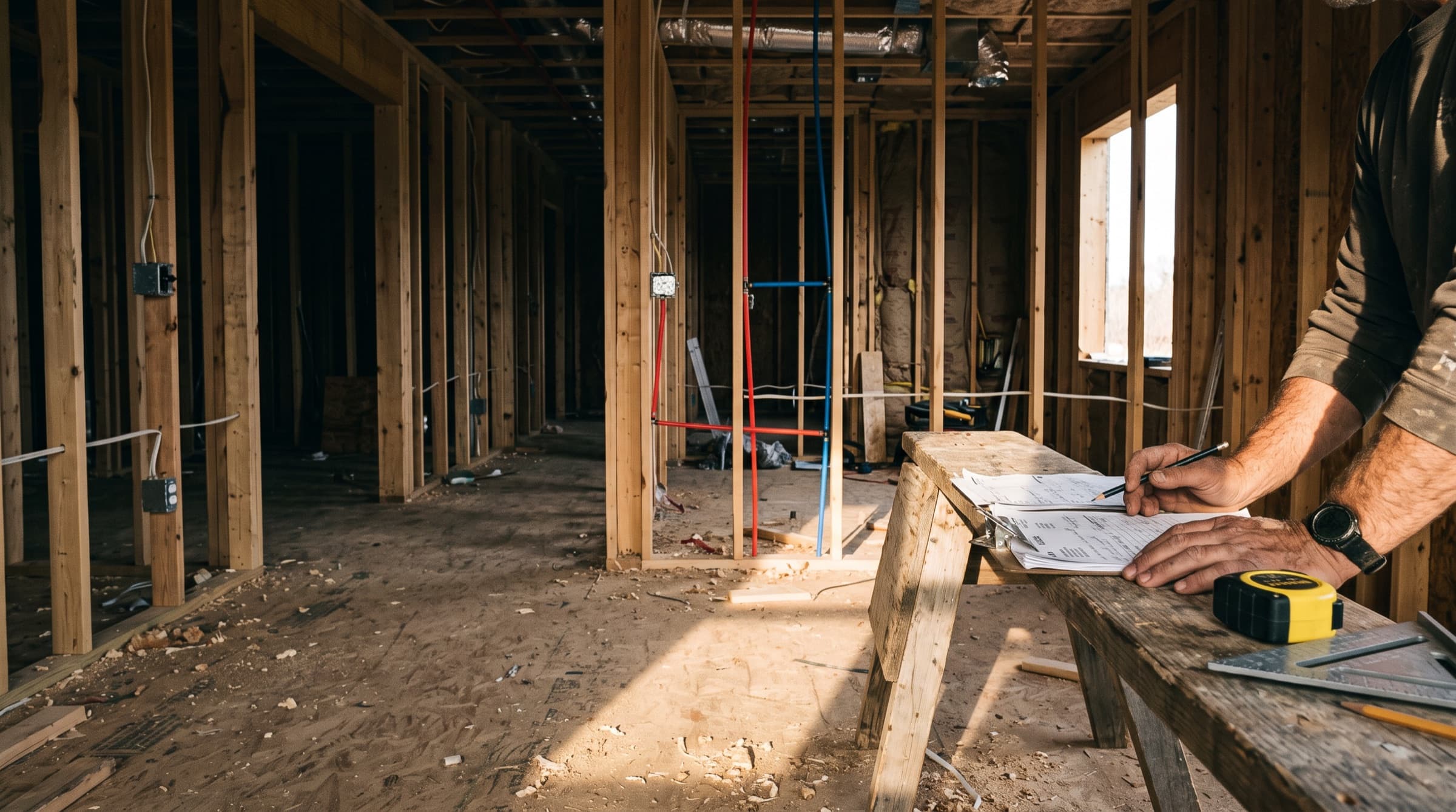

Sparkies, how many hours have you sunk into meticulously scanning electrical plans and dense PDFs just to pull together a single bid? Poring over symbols, tracing circuits, manually counting outlets, fixtures, calculating wire runs... it's a necessary evil for accurate electrical takeoff, right?
Necessary, yes. Time-consuming? Absolutely.
In today's fast-paced market, speed and accuracy win jobs. That complex multi-family unit plan or that detailed commercial renovation spec sheet isn't just paper – it's a minefield of potential errors if you rush, and a black hole for your time if you don't. One missed circuit, one underestimated run, one overlooked fixture spec, and bam – there goes your margin. We've all been there.
The Problem: Manual Takeoffs are Slowing You Down
Think about the traditional electrical takeoff process:
- Receive PDF plans (sometimes dozens, even hundreds of pages).
- Print 'em out (or squint at a screen).
- Manually identify and count every symbol: outlets, switches, lights, panels, low-voltage drops...
- Measure runs (often using scale rulers or clunky software tools).
- Cross-reference with spec sheets for specific fixture types or requirements.
- Tally everything up in a spreadsheet.
- Double-check (if you have time).
It's tedious, prone to human error (especially after a long day), and incredibly slow. While you're spending hours on takeoff, another contractor using smarter electrical takeoff software might have already submitted their bid.
The Solution: AI Electrical Estimating Power
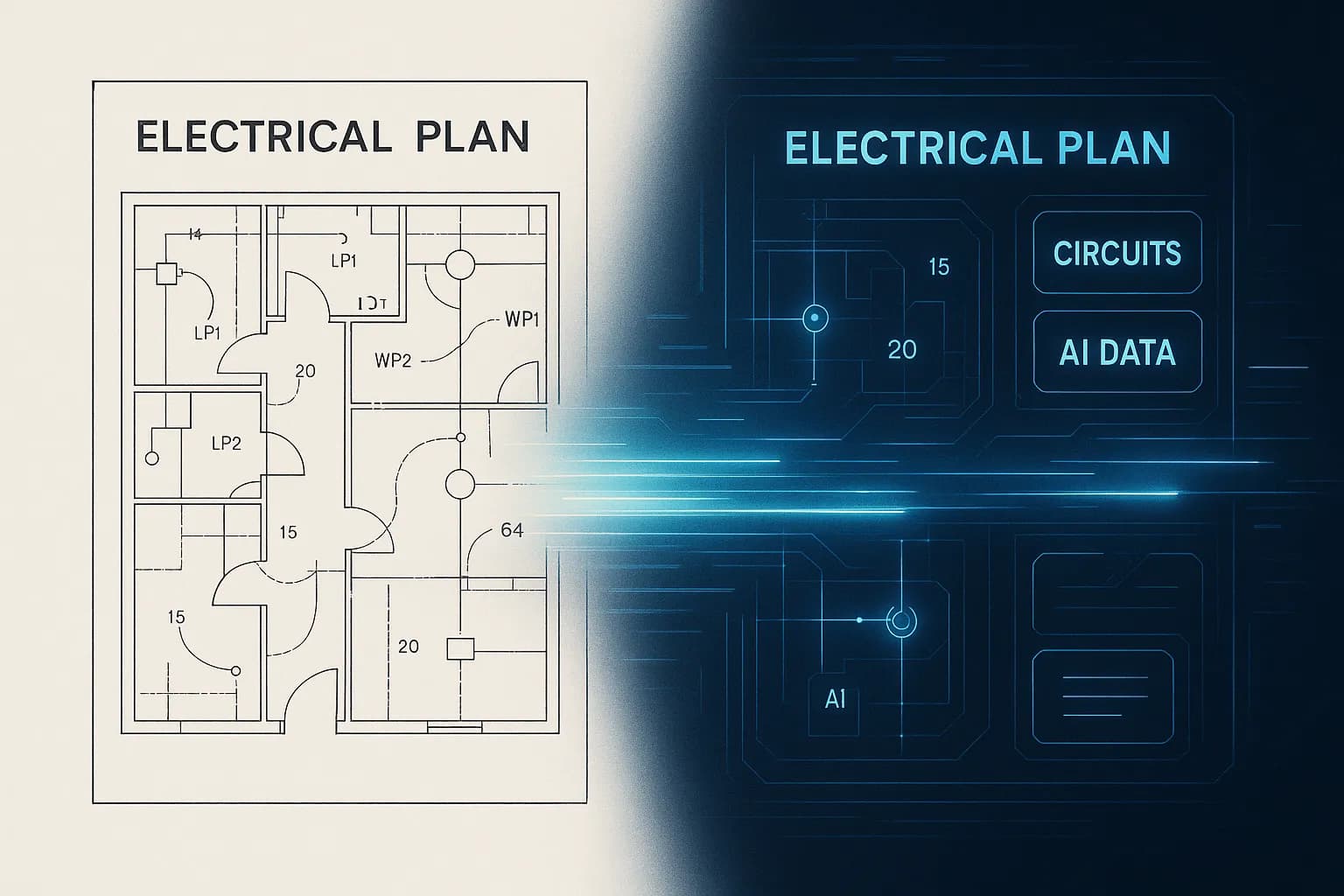
This is where AI isn't just tech talk; it's a game-changer. Construction estimating AI is here. Imagine feeding those same complex PDFs and plans into a system that can read them like an experienced electrician, but in a fraction of the time.
Here’s how AI is revolutionizing electrical takeoffs:
- Symbol Recognition: Modern AI can be trained to instantly recognize standard electrical symbols on plans, accurately identifying and counting components. No more manual tallying for a truly accurate electrical takeoff.
- Automated Measurements: AI algorithms analyze scaled drawings to automatically calculate circuit lengths, conduit runs, and wire distances, improving the speed to read electrical blueprints fast.
- Data Extraction: Need specific requirements from a dense spec sheet buried in the PDF? AI scans the text, pulls out relevant details like fixture models or voltage requirements, and links them to the plan items. Essential for complex bids.
- Consistency: AI applies the same logic every single time, eliminating variations and ensuring a reliable electrical bid foundation.
The Benefits: Why You NEED AI Estimating Tools NOW
This isn't science fiction anymore. This is practical technology available today that directly impacts your bottom line.
- Blazing Speed: Reduce electrical takeoff time from hours (or even days) to minutes. This lets you generate faster electrical bids and quote more jobs.
- Pinpoint Accuracy: Dramatically reduce costly errors. Protect your margins and bid with confidence using AI estimating accuracy.
- Competitive Edge: Get accurate bids out faster than competitors still stuck doing manual PDF takeoff for electricians. Faster turnaround often means winning the job.
- Focus on What Matters: Spend less time buried in paperwork and more time planning the actual work, managing your crew, or growing your business.
If you're still doing manual takeoffs from complex plans and PDFs, you're leaving time and money on the table. Plain and simple. The industry is moving towards smarter, faster ways of working, and AI-powered estimating is leading the charge, especially for trades dealing with detailed plans like electrical.
Making AI Electrical Estimating Happen
So, how do you tap into this? Look for modern software solutions built with tradespeople in mind. AI Estimating tools are emerging that integrate this capability directly into your workflow. Test any of them on a plan set you've already counted by hand, and compare. Plan reading is still the hardest part for AI to get right, and a symbol count you can't check isn't worth the speed. (For the record: at Trade Agent, takeoff measurements are still entered by a person, and Arti writes the estimate from your walkthrough notes and photos.)
Don't get left behind squinting at lines. Ask every tool you look at what it can actually read from electrical plans, and make it prove it on one of yours.